Discover what truly matters to tenants by hearing directly from the source. At VTS Accelerate 2024, we had an exclusive opportunity to engage with top executives about their leasing preferences.
Brendan Wallace, CEO and Chief Investment Officer at Fifth Wall, led the "What Tenants Want" panel featuring:
- Neil Vogel, CEO of Dotdash Meredith
- Melissa Myers, Head of Global Workplace and Safety at Okta
- Shannon Loew, VP of Worldwide Corporate Real Estate and Facilities at Amazon
If you missed the session, here are the key takeaways from their discussion.
Hybrid Work is Here to Stay
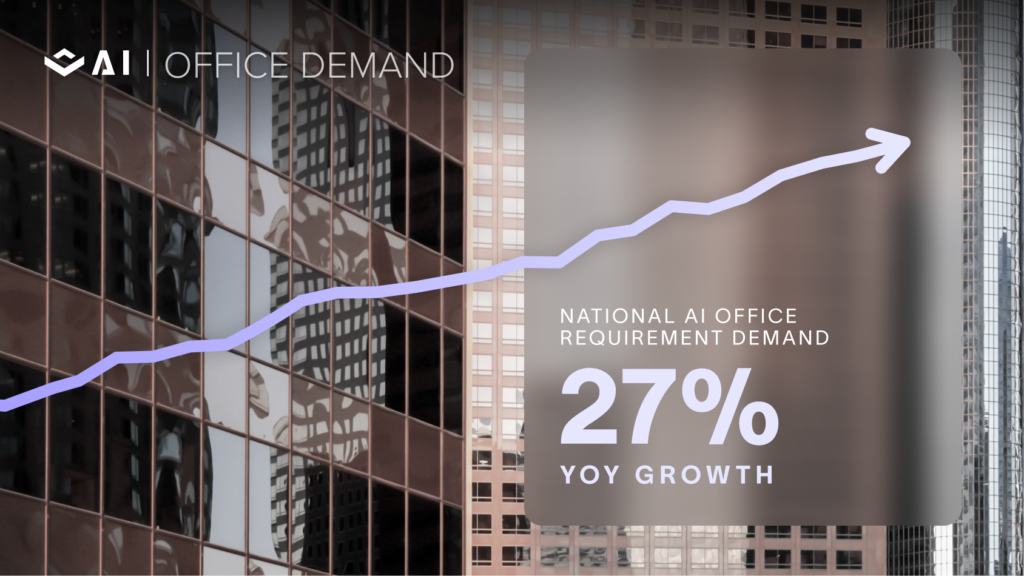
The return-to-office strategy remains a hot topic. According to a recent VTS study, 62% of companies are executing a hybrid work strategy, while only 1% have gone fully remote.
- Dotdash Meredith: Mandates three days a week in-office. CEO Neil Vogel noted, “Part of it is cultural . . . when you create media, you need to be together.”
- Okta: Melissa Myers highlighted a mix where 60% of their employees aren't within commutable distance, necessitating a blend of remote, hybrid, and full-time in-office work to maintain a cohesive environment.
Safety and Security are Top Priorities
Safety has become paramount, with 87% of company leaders emphasizing its importance. Melissa Myers underscored that a safe environment is the foundation for innovation: “People need to know that they're safe first... Once those [needs] are met, then you can get to, ‘how do you go solve some of the big problems?’”
Shannon Loew from Amazon echoed this, stating that safety is “table stakes” across their portfolio of 325,000 employees in 68 countries.
Technology’s Role in Access and Engagement
Technology is revolutionizing the workplace experience. Statistics show 53% of leaders want mobile access, and 92% desire a singular app for accessing various spaces.
Melissa Myers focuses on "ease of use" to mitigate the friction of the commute: “Once you get there, can I create an ease of use that allows you to get into the building safely, securely, and easily?”
Creating Connections and Communities
A major post-COVID challenge is fostering a sense of belonging.
- Energetic Spaces: Neil Vogel stressed the need for "fun and energetic" workplaces, noting that for young people in cities like New York or Des Moines, the office is where they connect and make friends.
- Meaningful Connection: Myers added that if employees feel connected to their coworkers, they are more open to exploring ideas and innovation.
Sustainability and ESG Drive Corporate Strategies
ESG considerations are shaping corporate real estate more than ever.
- Amazon: Aiming for net zero by 2040, Shannon Loew noted that the adaptive reuse of the Lord & Taylor Building saw a very clear and positive sentiment return from employees.
- Okta: Uses gamification to engage employees in sustainability. Myers noted that while LEED and Well-certifications are "must-haves," employees want to see companies go beyond the requirements.
- Dotdash Meredith: Vogel noted that even small efforts, like getting the right eco-friendly straws, matter deeply to employees.
Data-Driven Decision-Making
Leveraging data is critical to optimizing office footprints.
- Quantitative Data: Okta uses sensor data and surveys to understand why certain spaces resonate more than others.
- Qualitative Context: Shannon Loew pointed out that anecdotal evidence often contradicts raw occupancy data. For example, employees may report "no desks available" despite occupancy data showing supply, revealing true usage patterns and sitting preferences.
- The Bottom Line: Neil Vogel summarized the data simply: “We sell more ads when we're in the office... these are nondebatable facts.”
Meeting Tenant Expectations for the Future
The panel delivered a blueprint for the future of office design: embrace sustainability, adaptability, and connection to draw employees in and supercharge productivity.
See our full Accelerate rewind here.
FAQs
1. What is the "ease of use" strategy in tenant experience?
As Melissa Myers of Okta explained, while owners can't change a tenant's commute, they can use technology to make the transition into the building frictionless. This includes mobile access and singular apps that provide secure, easy entry.
2. Why are "anecdotal insights" important alongside sensor data?
As Amazon’s Shannon Loew noted, sensor data might show desks are available, but employee anecdotes might reveal that the preferred or functional spaces are full. Combining both types of data allows owners to design more effective workspaces.
3. Does ESG impact employee retention?
Yes. Executives from Amazon and Dotdash Meredith highlighted that employees are deeply concerned with company values. Initiatives like adaptive reuse and LEED certification contribute to positive employee sentiment and brand alignment.